
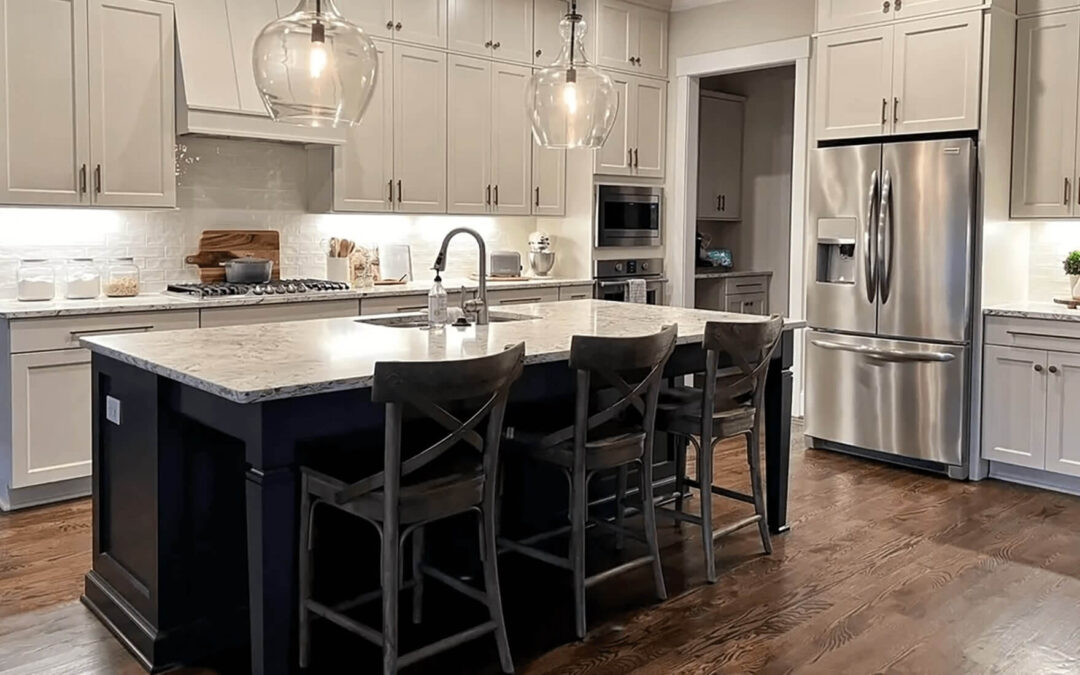
Cabinet Painting in Charlotte NC for a durable finish using Conversion Varnish
Cabinet Painting in Charlotte NC homeowners choose should use Conversion Varnish for a durable finish that can handle daily cabinet uses.
You open a kitchen cabinet, grab the handle, and notice something that was not there a few months ago. The paint around the handle is starting to peel. A few days later, you spot chips along the cabinet edges. Then the finish near the sink begins to look worn and sticky.
The painter who completed the job told you the cabinets were painted with a quality wall or trim paint. At first, everything looked great. The color was fresh, the kitchen looked updated, and you avoided the cost of replacing the cabinets. Six months later, you are looking at another repair bill.
This is one of the biggest problems homeowners face when they hire a general house painter for Cabinet Painting. Cabinets are not walls. They are touched, opened, closed, bumped, cleaned, exposed to moisture, and handled every day. A finish that works well on a wall may not be able to handle the constant physical contact that kitchen cabinets receive.
That difference can cost homeowners thousands of dollars when an inexpensive-looking cabinet painting job fails and has to be redone.
Wall Paint Is Not Made for Constant Cabinet Handling
The problem starts with how many standard paints work. Wall paint dries as water or other liquid leaves the coating. Once it feels dry, the surface may look finished, but the paint is still a softer layer than the hard, durable finish needed for high-use cabinetry.
That can be perfectly acceptable on a wall. Walls do not have someone grabbing the same spot dozens of times a day. They are not constantly exposed to cooking oils from hands, splashes near a sink, cleaning products, and repeated impact from doors and drawers being opened and closed.
Cabinets face all of those conditions at once.
The area around a cabinet handle is a good example. Every time someone opens the door, their hand touches the same small area. Over time, that repeated contact puts stress on the finish. If the coating is too soft, it can begin to wear away, become sticky, or separate from the surface.
The same thing happens along cabinet edges. Doors bump against frames. Drawers are pulled out and pushed back in. Pots, pans, plates, and other items may hit the inside of the cabinet. A finish designed for a wall is being asked to perform like a professional cabinet finish, and that is where problems often begin.
The Physics of Touch Matters More Than Most Homeowners Realize
You do not need to understand complicated science to understand why cabinets wear differently from walls. Think about the difference between touching a painted wall once in a while and opening the same cabinet every morning, afternoon, and evening.
A cabinet finish has to handle repeated contact. It also has to handle small impacts, friction, heat, moisture, and exposure to oils from hands and cooking. Every one of those factors can slowly wear down a finish that was never designed for that type of use.
This is why Cabinet Painting is not simply a matter of putting a different color on an existing surface. The product used on the cabinet matters just as much as the color. A professional cabinet finish needs to become hard enough to handle daily use while still providing a smooth, attractive appearance. This is where Conversion Varnish becomes important.
Why Conversion Varnish Is Different
Conversion Varnish does not simply dry in the same way ordinary paint dries. It cures into a harder, more durable finish that is designed for demanding surfaces such as cabinetry. In simple terms, regular paint dries. Conversion Varnish becomes a tougher protective finish.
That difference matters in a kitchen because the cabinets are constantly being used. The coating needs to stand up to repeated handling, moisture, heat, grease, spills, and cleaning. It also needs to resist the kind of everyday wear that can cause chipping, cracking, and peeling. Conversion Varnish is designed for that type of environment.
The result is a smooth, factory-like finish that is better suited to cabinets than standard wall paint or basic trim paint. The goal is not simply to make the cabinets look good on the day the job is completed. The goal is to create a finish that continues to perform as the cabinets are used every day. That is a major difference between a quick paint job and professional cabinet refinishing.
The Cheapest Cabinet Painting Quote May Not Be the Cheapest Option
Many homeowners compare cabinet painting quotes by looking at the price alone. A general painter may offer a lower price because the process is treated like a standard painting project. The cabinets are cleaned, painted, and put back into use.
The problem is that the price of the initial job is only part of the cost. If the finish begins peeling or chipping within months, the homeowner may have to pay for additional preparation, repairs, and a completely new finish.
In some cases, the second job can cost more because the damaged coating has to be removed or carefully corrected before a new finish can be applied. The homeowner may also have to deal with more disruption in the kitchen and the frustration of paying twice for the same transformation. This is how a lower-cost painting job can end up costing thousands.
The better question is not simply, “How much does it cost to paint my cabinets?” A better question is, “What finish is being used, and is it designed for the way cabinets are used?”
Cabinet Refinishing Is More Than Changing the Color
A professional Cabinet Painting project should focus on the condition of the existing cabinets, the preparation of the surfaces, and the finish being applied.
If the cabinet boxes and doors are in good condition, refinishing can often provide a major visual change without tearing out the entire kitchen. The existing cabinetry can receive a new color, a new stain, updated hardware, or new door and drawer fronts depending on the condition and the look the homeowner wants.
This is different from simply covering the old surface with another layer of paint. Proper preparation helps the new finish adhere correctly. The surface must be cleaned and prepared before the professional finish is applied. Without proper preparation, even a high-quality coating may not perform as it should.
The finish also needs to be applied correctly. Conversion Varnish is a professional-grade product that requires the right process and equipment. It is not the same as opening a can of household paint and applying it with a brush or roller.
That difference is one reason homeowners should look for kitchen cabinet painters who specialize in cabinetry rather than choosing a general painter who mainly works on walls, ceilings, and trim.
What Happens to Cabinets That Were Painted with the Wrong Product?
The most common problem is not always immediate failure. In many cases, the cabinets look excellent at first. The finish may appear smooth and the color may look exactly as the homeowner expected. The problems can show up later as the cabinets experience daily use.
The areas around handles may become worn first because they receive the most contact. Cabinet edges may begin to chip because they are exposed to repeated bumps. Moisture can become a problem near sinks and dishwashers. Grease and cleaning products can also affect a finish that was not designed for regular kitchen use.
Once peeling or chipping begins, the problem can spread. A damaged area is easier to catch, scratch, or pull away from the surface. What started as a small problem near one handle can eventually become a cabinet-wide appearance issue. This is why the finish used during the original project matters so much.
Repainting Painted Cabinets Requires the Right Approach
Homeowners often ask whether they can repaint kitchen cabinets that have already been painted. The answer depends on the condition of the existing finish and the products that were used before.
Repainting painted cabinets is not always a simple matter of adding another coat. If the old finish is peeling, soft, damaged, or poorly bonded, the surface may need more preparation before it can receive a new professional finish. Adding more paint over a failing surface does not solve the underlying problem.
A professional assessment can help determine whether the cabinets are suitable for refinishing, whether the existing coating needs to be addressed, or whether another solution makes more sense. In some cases, refinishing is a good way to update cabinets that are structurally sound. In other situations, refacing or replacing certain components may provide a better result. The condition of the cabinets should guide the solution.
Refinishing, Refacing, and Replacement Are Not the Same Thing
Not every cabinet project requires a complete replacement. If the cabinet boxes are in good condition, refinishing can provide a major change without the cost and disruption of removing the entire kitchen.
Refacing is another option when homeowners want to update the visible surfaces of their cabinetry. This can include changes to cabinet doors and drawer fronts, giving the kitchen a new appearance while retaining much of the existing cabinet structure.
Sometimes, the best solution includes a combination of services. A kitchen may have a cabinet layout that mostly works but lacks one specific storage area. For example, there may be unused space at the end of a cabinet run that could accommodate an additional cabinet for trash and recycling. In a situation like that, a small custom cabinet addition can be built to fit the space while the rest of the kitchen is being refinished or refaced.
The goal is not to turn every project into a complete custom cabinet installation. It is to solve the actual problem the homeowner has.
Why Professional Cabinet Painting Should Be Treated as a Specialized Service
Professional cabinet painting requires more than knowing how to apply paint. The person completing the project needs to understand how cabinet surfaces are used and what type of finish is appropriate for them.
Cabinet doors and drawer fronts also need careful handling. They are often removed and finished separately to achieve a smoother, more consistent result. The cabinet frames may be refinished in the home while the doors and drawer fronts are completed separately and later reinstalled. This approach can help limit disruption while allowing the visible parts of the cabinets to receive a professional finish.
The process also gives homeowners more opportunities to make informed decisions about color and appearance. A small paint swatch can look very different from a full cabinet door in the actual kitchen. Lighting, surrounding colors, countertops, flooring, and backsplashes can all change how a finish appears. That is why seeing a real sample can be useful before the entire project is completed.
How We Approach Cabinet Refinishing at Carolina Cabinet Pros
At Carolina Cabinet Pros, we focus primarily on refinishing, refacing, staining, and updating existing cabinetry rather than treating every project like a full cabinet replacement.
Our process centers around the finish because the finish has to work as hard as the cabinets do. We use Conversion Varnish to create a smooth, durable, factory-like surface designed for the daily demands of kitchens, bathrooms, built-ins, and other high-use cabinetry.
We also work with homeowners who want more than a simple color change. That can include updated hardware, new cabinet doors, new drawer fronts, cabinet staining, or restaining when the existing wood look is worth preserving.
When a kitchen has a small missing piece, we can also help address that need. If a cabinet layout has unused space that could benefit from an additional cabinet, we work with a cabinet maker on select small additions so the new piece can fit the existing project.
That might mean adding a small cabinet at the end of a shelf to create dedicated space for trash and recycling. The focus remains on improving the existing cabinetry rather than turning every project into a complete custom kitchen build.
The Right Finish Can Protect the Money You Already Spent
Cabinet upgrades are an investment. Whether you are changing the color, updating the style, replacing drawer fronts, adding hardware, refacing the visible surfaces, or refinishing the existing cabinets, the finish plays a major role in how long the result lasts.
Choosing a product designed for walls can create a problem because cabinets experience far more daily contact than walls do. A finish that looks good during the first week may not be able to handle years of repeated use.
Conversion Varnish is designed with that daily use in mind. It cures into a harder, more resilient surface that is better suited to the demands of cabinetry, helping create the smooth, durable result homeowners expect from professional cabinet refinishing.
The goal of professional Cabinet Painting should not be to make cabinets look good only when the job is finished. The goal should be to create a finish that continues to look and perform well after the handles have been touched thousands of times.
Frequently Asked Questions About Cabinet Painting and Conversion Varnish
- Is wall paint suitable for kitchen cabinets?
Wall paint is designed primarily for walls and is not the ideal choice for cabinets that receive constant handling, repeated impact, moisture, oils, and cleaning. A professional cabinet finish such as Conversion Varnish is designed for the demands of high-use cabinetry.
- Why is Conversion Varnish better for cabinets?
Conversion Varnish cures into a hard, durable finish rather than simply drying into a softer paint layer. It is designed to provide better resistance to everyday wear, moisture, kitchen spills, cleaning products, chipping, cracking, and peeling.
- Can you repaint kitchen cabinets that already have paint on them?
Yes, existing painted cabinets may be suitable for refinishing, but the condition of the current finish matters. Peeling, damaged, or poorly bonded coatings may require additional preparation before a new professional finish can be applied.
- Is repainting painted cabinets the same as painting them for the first time?
No. Repainting painted cabinets requires an evaluation of the existing coating and the condition of the surface. Applying a new layer over a failing finish may not solve the problem, which is why professional preparation is important.
- Should I refinish or replace my cabinets?
If the existing cabinet boxes are structurally sound, refinishing or refacing may provide the updated appearance you want without the cost and disruption of full replacement. If the cabinets are severely damaged or the layout no longer works, replacement or selective cabinet additions may make more sense.
- What should I look for when hiring kitchen cabinet painters?
Look for a company that specializes in cabinets and can clearly explain the finish being used. Ask whether the product is designed for high-use cabinetry, how the surfaces are prepared, how doors and drawer fronts are handled, and whether the process is intended to create a durable factory-like finish.
- How long can a professional cabinet finish last?
The life of a cabinet finish depends on the condition of the cabinets, preparation, application, daily use, and care. A professional Conversion Varnish finish is designed for the demands of high-use cabinetry and offers a more durable solution than standard household paint.
- Is professional cabinet painting worth it?
It can be, especially when the existing cabinets are in good condition and the right finish is used. The cost of a professional process can help homeowners avoid paying for a quick painting job that fails and needs to be redone.
Cabinets are not walls, and the finish used on them should reflect that difference. A standard wall or trim paint may look good at first, but daily handling can expose its weaknesses. The constant contact around handles, repeated opening and closing, moisture, heat, oils, spills, and cleaning can quickly damage a finish that was not designed for cabinetry.
Conversion Varnish provides a different approach. Because it cures into a harder, more durable finish, it is designed to handle the demands of everyday cabinet use while creating the smooth, factory-like appearance homeowners want.
When you are considering Cabinet Painting, repainting painted cabinets, refacing, staining, or a small cabinet addition, the product and process matter just as much as the color. A professional finish can help protect the investment you are making in your kitchen, bathroom, built-ins, or other cabinetry. The cheapest cabinet painting quote is not always the cheapest choice. If the finish fails, you may end up paying for the same project twice.
Carolina Cabinet Pros: The Gold Standard in Cabinet Refinishing
Carolina Cabinet Pros provides professional cabinet refinishing, staining, restoration, and refacing, with durable conversion varnish finishes for homeowners throughout North Carolina and South Carolina. From kitchens and bathrooms to built-ins and custom cabinet updates, we help transform the cabinets you already have with expert craftsmanship and a beautiful, long-lasting finish. Contact Carolina Cabinet Pros today to schedule your free consultation at 704-363-3061