
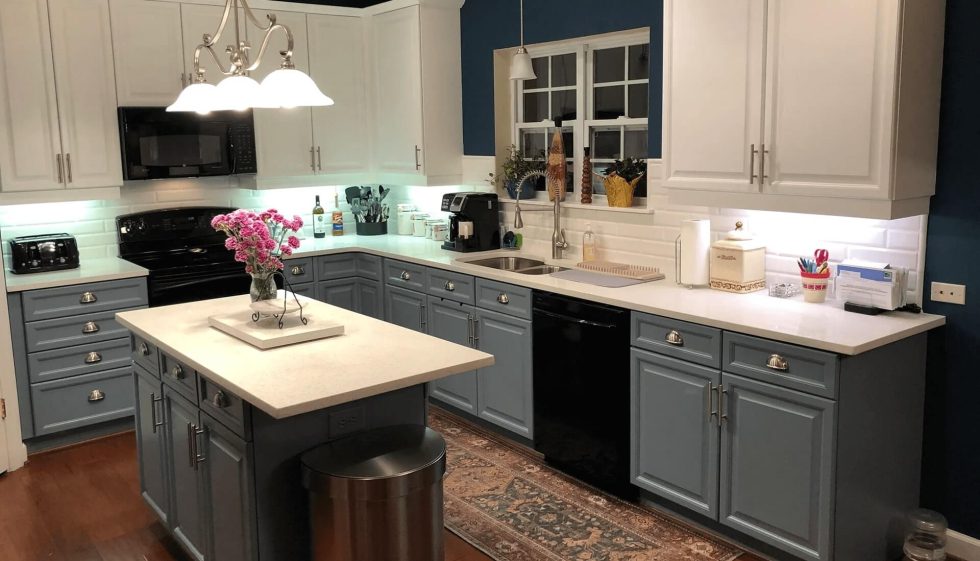
Cabinet Restoration in Charlotte can Save Sink Cabinets
Cabinet Restoration in Charlotte NC helps homeowners decide whether water-damaged sink-base cabinets can be repaired or need replacement.
The first sign is usually a small puddle you did not notice at first. Then the smell starts, slightly damp and musty, coming from under the kitchen sink every time you open the cabinet door. When you finally look inside, the wood looks darker than it should, the base feels soft, and panic sets in because it suddenly feels like the whole kitchen might be falling apart.
Water damage under the sink is one of those problems that feels bigger than it often is. The fear is not just about the leak itself but what it might have done to the structure hiding behind that cabinet door. In many cases, homeowners assume the only solution is a full kitchen overhaul, even when parts of the cabinet can still be saved.
Understanding what can be recovered and what actually needs replacing is where Cabinet Restoration becomes the practical answer.
Why Sink-Base Cabinets Take the Worst Hit
Sink-base cabinets deal with a constant mix of moisture, plumbing pressure, and everyday use. Even a slow drip can spread across the bottom panel and stay unnoticed for days or weeks. Because these cabinets are enclosed, air circulation is limited, which means moisture does not dry out quickly.
The materials used in many kitchen cabinets are also sensitive to water exposure. Once they absorb moisture, they begin to swell and lose their shape. That is when doors stop closing properly, shelves start bending slightly, and the surface begins to feel uneven.
This kind of damage does not always happen all at once. It often starts small and spreads quietly, which is why many homeowners only notice it after the cabinet has already changed in texture and strength.
Signs Your Cabinets Can Be Restored vs Replaced
Not every water-damaged cabinet is beyond saving. The difference often comes down to how deep the damage has gone and how long it has been exposed.
If the cabinet surface is slightly swollen but still firm underneath, there is often a good chance it can be repaired and strengthened again. If the structure still holds its shape and the damage is mostly on the visible panels, restoration can bring it back to a usable condition without removing the entire unit.
When the damage reaches the point where the base is soft, crumbling, or no longer supporting weight properly, replacement becomes more realistic. Cabinets that have been exposed to water for a long time may also develop internal weakening that is not immediately visible from the outside.
A trained eye is usually needed here because what looks severe on the surface can sometimes be fixed, while what looks minor may already have deeper structural issues.
What Cabinet Restoration Actually Involves
Cabinet Restoration is not about covering up damage. It is about rebuilding strength and improving appearance so the cabinet can function properly again.
The process often starts with assessing the extent of the water damage. This includes checking how far the moisture has spread and whether the structure underneath is still stable. Once that is clear, the damaged areas are treated, reinforced, or replaced depending on what is needed.
In many cases, parts of the cabinet can be repaired while other sections are refinished so everything matches again. This can include surface smoothing, replacing weakened panels, and restoring the finish so the cabinet blends back into the kitchen instead of standing out as a repair.
When homeowners choose to restore kitchen cabinets rather than replace them entirely, they often save time and avoid unnecessary disruption in the home. It also allows the existing kitchen layout to remain intact, which is important in spaces where design and storage already work well.
When Replacement Becomes the Better Option
There are situations where restoration is no longer the best path. If the cabinet has been exposed to repeated leaks over time, the structure may lose too much integrity to safely repair.
Another sign is when the cabinet no longer holds its shape even after drying out. If doors are misaligned beyond adjustment or the base no longer sits evenly, replacement may be the only reliable solution.
Replacement also makes sense when homeowners are already considering a larger kitchen update. In those cases, starting fresh can sometimes be more practical than repairing a system that is already at the end of its lifespan.
Still, even when replacement is needed, it does not always mean the entire kitchen must be redone. In many cases, only the affected section is replaced while the rest of the cabinetry is refinished to match.
How Professionals Restore Kitchen Cabinets After Water Damage
Water-damaged cabinets require more than surface-level attention. The goal is not just to make them look better but to bring them back to a stable condition that can handle daily use again.
Professionals typically begin by drying and stabilizing the affected area. Once the moisture issue is controlled, they assess which parts of the cabinet can be kept and which need to be rebuilt. From there, the repair work focuses on reinforcing weak areas and replacing damaged sections without altering the entire kitchen layout.
Finishing work plays a big role in making everything look consistent again. This is where refinishing techniques help blend repaired sections with existing cabinetry so there are no visible signs of patchwork.
In some cases, hardware adjustments are also needed. Doors and drawers that were affected by swelling may need realignment so they open and close smoothly again. The goal is always to bring the cabinet back to a point where it looks and functions like it belongs in the kitchen, not like a repair job was done on it.
Small Upgrades That Can Happen During Restoration
Water damage repair often opens the door to small improvements that homeowners did not originally plan for. When cabinets are already being worked on, it becomes easier to make minor adjustments that improve storage and function.
In some kitchens, there is unused space at the end of a cabinet run that can be converted into a small additional unit. This might become a pull-out bin for trash and recycling or a simple storage cabinet that improves organization. These changes are not part of a full remodel, but they make better use of space that already exists.
This is also where collaboration with a cabinet maker can come into play. While refinishing and restoration remain the main focus, small custom additions can sometimes be built to fit specific gaps or functional needs. It is a practical way to improve a kitchen without changing its overall layout.
Working With Carolina Cabinet Pros
At this stage, homeowners usually want a clear answer on whether their cabinets are worth saving or if replacement is unavoidable. This is where experience matters most, because water damage is not always predictable from the outside.
When we handle Cabinet Restoration projects, we start by looking closely at what is still structurally sound. Our focus is always on saving as much of the original cabinet as possible while making sure the result is stable and long lasting. In many homes, we are able to repair sink-base cabinets that initially looked like they needed full replacement.
We also work with refinishing, refacing, and staining to bring consistency back into the kitchen once repairs are complete. If a section of cabinetry needs to be replaced or a small new cabinet can improve the layout, we coordinate with a cabinet maker to build and fit those pieces so they match the existing design.
Our goal is not to push unnecessary replacement. It is to restore function and appearance in a way that fits the home and avoids a full kitchen overhaul when it is not needed.
FAQs About Water-Damaged Cabinets
- Can water-damaged sink cabinets always be repaired?
Not always. It depends on how long the water has been present and how deep the damage has gone. If the structure is still solid, Cabinet Restoration is often possible. If the base has weakened too much, replacement may be required.
- How long does it take to restore kitchen cabinets after a leak?
The timeline depends on the extent of the damage. Minor repairs can be completed relatively quickly, while more extensive restoration involving structural repair and refinishing will take longer. The drying and stabilization phase is often what sets the pace.
- Will restored cabinets look different from the rest of the kitchen?
When done properly, restored sections are blended to match the existing cabinets. The goal is consistency so the repaired area does not stand out visually.
- Is it worth restoring old cabinets after water damage?
If the cabinets are still structurally sound and the layout works for your kitchen, restoration is often more practical than replacement. It allows you to keep the existing design while fixing the damaged areas.
- What causes most sink-base cabinet water damage?
Most cases come from slow plumbing leaks or unnoticed drips under the sink. Over time, trapped moisture leads to swelling, weakening, and surface damage.
Water damage under the sink can feel overwhelming, but it does not always mean starting over. With the right approach to Cabinet Restoration, many kitchens can be brought back to full function without the disruption of a complete rebuild.
Carolina Cabinet Pros: The Gold Standard in Cabinet Refinishing
Carolina Cabinet Pros provides professional cabinet refinishing, staining, restoration, refacing, and durable conversion varnish finishes for homeowners throughout North Carolina and South Carolina. From kitchens and bathrooms to built-ins and custom cabinet updates, we help transform the cabinets you already have with expert craftsmanship and a beautiful, long-lasting finish. Contact Carolina Cabinet Pros today to schedule your free consultation at 704-363-3061.