
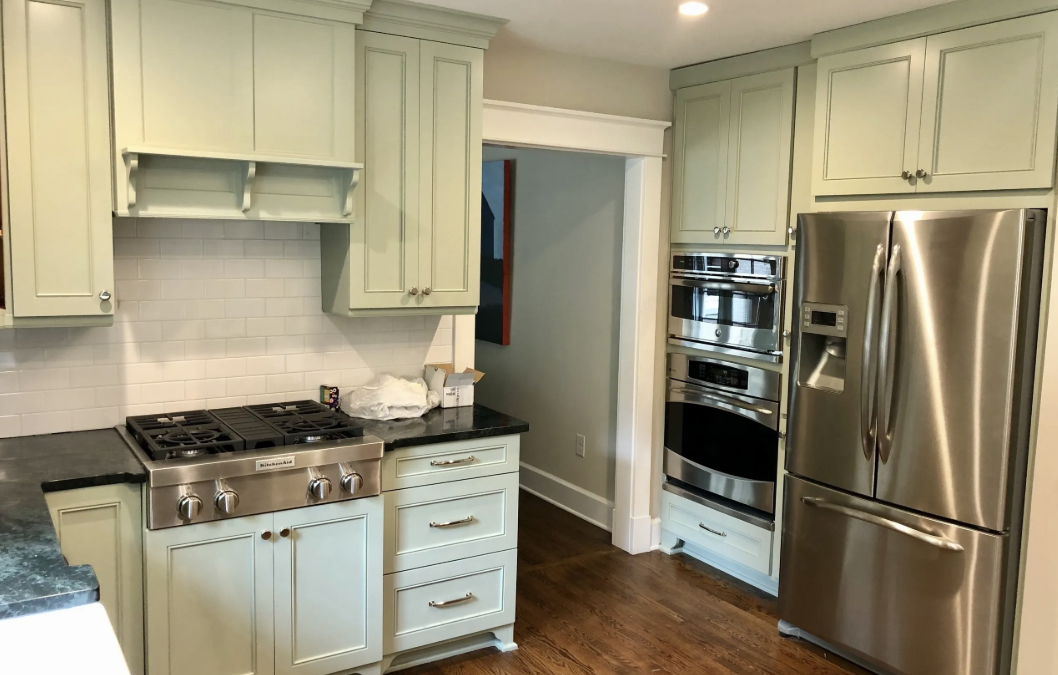
Charlotte cabinet refacing with sound frames
Cabinet refacing in Charlotte NC begins with making sure your cabinet frames are structurally sound before any work starts.
Your kitchen has been serving you well for years, but the cabinets are starting to look tired. Maybe the finish is scratched, the doors are warped, or the style feels outdated. You’ve heard about cabinet refacing and like the idea of giving your kitchen a fresh look without a full remodel. But there’s a big question standing between you and a beautiful, updated kitchen: how do you know if your cabinets are too old to reface?
Cabinet refacing is a smart, cost-effective way to breathe new life into your kitchen, but it only works when the existing cabinet frames are solid. If the structure isn’t sound, no new doors, paint, or drawer fronts will make your kitchen functional or look good. Before any work begins, you can do a quick self-check to see if your cabinet boxes are ready for refacing. Here’s an easy checklist to guide you.
- Check for Warping or Sagging
The first sign your cabinets may not be reface-ready is warping or sagging. Open all the doors and drawers and pay attention to the alignment. Do the doors close evenly? Do the drawers slide smoothly? If a door sticks or a drawer tilts, the cabinet box might be compromised. Minor adjustments can be fixed, but significant warping usually means the frame isn’t sturdy enough to support new surfaces.
Another simple test is to press gently on the sides and bottom panels. They should feel solid and firm. If you notice panels bending under light pressure or the cabinet frame seems wobbly, refacing alone won’t be enough. You may need a more extensive repair or even replacement.
- Inspect for Water Damage or Rot
Moisture is one of the biggest enemies of cabinet frames. Look for water stains, soft spots, or bubbling along the bottom panels and around the sink area. Even small leaks over time can compromise the wood or particleboard, making it unsafe for refacing. You don’t need to be a carpenter to spot this—just tap lightly on the surfaces. A hollow or spongy sound is a warning that the cabinet box may not hold new doors and finishes properly.
Check the back of the cabinets too. Sometimes the damage isn’t visible from the front, but the panels behind the appliances or plumbing lines can be rotting. Cabinets that are structurally weak from water damage are not good candidates for refacing, and replacing them may be the safer option.
- Examine the Joints and Fasteners
Your cabinets rely on joints and fasteners to hold everything together. Over the years, screws can loosen, nails can pop, and glue can fail. Inspect the corners, the connections between shelves and walls, and the points where the frame meets the face of the cabinet. The structure should feel tight and secure. Wiggling panels or loose corners signal trouble.
Cabinets built with quality materials and strong joints are perfect for refacing. Those with missing screws, cracked joints, or brittle plywood may require repairs before any refacing can happen. A professional can reinforce these areas, but identifying the problem early saves time and avoids surprises later.
Quick Checklist to Decide If Your Cabinets Are Reface-Ready
Here’s a simple way to summarize what to look for:
- Are the doors and drawers straight, level, and easy to operate?
- Are all panels solid with no soft spots or sagging?
- Are joints secure with no loose screws, nails, or cracks?
- Is there no significant water damage or rot?
If your cabinet boxes pass these checks, they’re likely ready for refacing. If not, you may need repairs or targeted replacements before starting the process.
Why Cabinet Refacing Works
Refacing replaces cabinet doors, drawer fronts, and visible panels while leaving the original frame intact. This approach gives your kitchen a fresh, modern look without the time and cost of a full remodel. It also allows you to update the finish, add new hardware, and even change the layout slightly if needed. Because the frame stays, a solid, structurally sound cabinet is essential.
Refacing is particularly effective when:
- You want to modernize outdated styles.
- The frame is in good condition but surfaces are worn or scratched.
- You prefer a cost-effective alternative to replacing all cabinets.
Even if your frames are solid, planning ahead ensures that the work is smooth and the results last.
When Small Additions Make Sense
Sometimes, during a refacing project, you may realize that a small gap or unused space could hold an extra cabinet for trash, recycling, or storage. While your main focus is refinishing and refacing, a professional team can coordinate with a cabinet maker to add small custom cabinets where needed. This flexibility lets you get a tailored solution without turning the project into a full-scale remodel.
Carolina Cabinet Pros Approach
At Carolina Cabinet Pros, we focus on giving kitchens a fresh, lasting look through cabinet refacing, painting, and staining. Our process always starts with checking the cabinet boxes to make sure they are solid and reface-ready. If a frame needs minor repairs, we handle that as part of the project so your new doors and finishes fit perfectly.
We also work with a trusted cabinet maker for small additions when needed. For example, if there’s a space at the end of a shelf that could hold a small cabinet for recycling, we can have one custom-built to fit seamlessly with your existing cabinets. This way, you get both the beauty of refacing and the functionality of an optimized kitchen layout.
FAQs
Q: Can I reface cabinets that have water damage?
A: Minor surface water damage can sometimes be repaired, but significant rot or soft spots in the cabinet box usually means replacement is safer.
Q: How long does refacing take?
A: Most kitchens can be refaced in a few days, depending on size and complexity. The key is having solid frames to start with.
Q: Will refacing change the layout of my kitchen?
A: Refacing updates the look and hardware but generally keeps the same layout. Small additions can be added if there’s space, like extra cabinets for storage or recycling.
Q: Are older cabinets always too old to reface?
A: Not necessarily. Age isn’t the main factor—it’s the condition of the frame. Cabinets that are structurally sound can often be refaced even if they are decades old.
Cabinet refacing is a practical, stylish way to update your kitchen without a full renovation. Before you start, take a careful look at your cabinet boxes. Straight doors, solid panels, and tight joints are all signs that your frames are ready. If you follow this simple checklist, you can feel confident that refacing will give you the kitchen you want without hidden problems or surprises.
When your cabinets pass the test, a professional team like Carolina Cabinet Pros can handle the rest—refinishing, painting, staining, and even adding small custom cabinets where needed. This approach keeps the process smooth, your kitchen functional, and the results beautiful for years to come.
Work with the best Cabinet refacing experts in Charlotte NC
Carolina Cabinet Pros is your North Carolina and South Carolina experts in Full-Service Cabinetry: providing professional cabinet staining, complete refinishing services, including cabinet refacing and lacquer cabinets, and high-end custom cabinetry. One call for a complete cabinet restoration anywhere in your home. Stop juggling contractors, call Carolina Cabinet Pros. From the Mountains to the Beach– no home is out of our reach. Contact Carolina Cabinet Pros to schedule a free consultation today, 704-363-3061.