
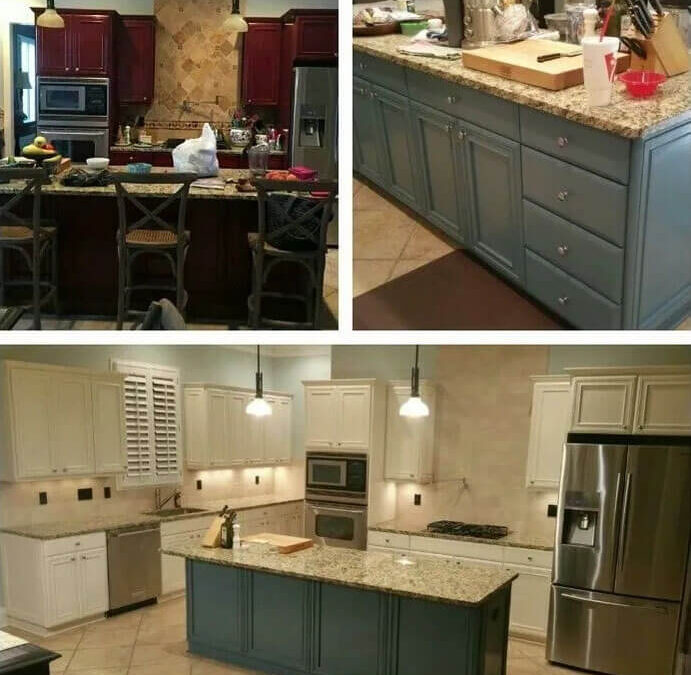
Paint kitchen cabinets in Charlotte for a long-lasting finish
Paint kitchen cabinets in Charlotte NC starts with thorough cleaning and degreasing to guarantee a lasting, professional finish.
The kitchen looked fine at first glance. The cabinets still opened and closed smoothly, and the color wasn’t terrible. But in the afternoon light, every surface told a different story. Sticky spots near the stove. A dull haze on the doors. Years of cooking had left behind something most people never notice until it’s too late. That hidden buildup is exactly why so many cabinet paint jobs fail. Before anyone tries to paint kitchen cabinets, the most important step happens long before the first coat of paint. It starts with proper cleaning and degreasing.
Many homeowners think paint problems come from bad paint or poor technique. In reality, the issue almost always begins underneath. Cabinets that are not properly cleaned will never hold paint the way they should. A lasting, professional finish depends on prep work that removes grease, residue, and buildup that have settled in over time.
What Really Builds Up on Kitchen Cabinets
Kitchen cabinets are exposed to more than most surfaces in the home. Every meal releases oils into the air. Steam carries grease upward where it settles on doors, frames, and drawer fronts. Over the years, this creates a thin but stubborn layer that traps dust and grime.
Even cabinets that look clean often have grease embedded into the surface. This buildup becomes a major problem when it is time to paint kitchen cabinets. Paint does not bond well to oily or dirty surfaces. Instead of attaching to the cabinet itself, the paint sticks to the grease. That weak connection leads to peeling, chipping, or bubbling sooner than expected.
This is why professional cabinet work always begins with deep cleaning, not just wiping things down.
Why Basic Cleaning Is Not Enough
A common mistake is assuming that regular household cleaners are enough to prepare cabinets for paint. They are not. Light cleaners are designed for daily maintenance, not for removing years of cooking residue.
Professional prep cleaning goes deeper. Degreasing products are used to break down oil and sticky residue that normal cleaners leave behind. These products are applied carefully to avoid damage while still removing everything that could interfere with paint adhesion.
Cleaning also includes areas people rarely think about. Inside corners, around hinges, along edges, and near handles tend to collect the most buildup. If grease remains in these areas, paint can fail even if the rest of the cabinet looks fine.
What Happens When Degreasing Is Skipped
Skipping or rushing the degreasing step causes problems that often appear months later. At first, the cabinets may look fine. Over time, issues begin to show.
Paint may start peeling around handles or corners. Some areas may look dull while others look shiny. Texture can appear uneven or rough. These are all signs that the paint never bonded properly to the cabinet surface.
Once this happens, fixing it usually means stripping and repainting the cabinets. That costs more time and money than doing it right the first time. Proper cleaning and degreasing prevent these problems before they start.
The Role of Cleaning in the Full Painting Process
Cleaning and degreasing are not standalone steps. They are the foundation for everything that follows.
After cabinets are thoroughly cleaned, they can be sanded properly. Sanding helps create a surface that paint can grip. If grease remains, sanding simply spreads the residue instead of removing it.
Once sanding is complete, primer is applied. Primer seals the surface and prepares it for paint. Primer also struggles to stick to greasy cabinets. If the surface was not cleaned correctly, even high-quality primer will fail.
Finally, paint is applied. At this point, the success of the entire project depends on how well the cabinets were prepped at the beginning.
Why Professional Prep Makes a Difference
Professional cabinet painters understand that prep work determines the outcome. They use the right cleaning products, the right tools, and the right amount of time to prepare cabinets correctly.
This is not about speed. It is about consistency and attention to detail. Professionals know how to clean without damaging wood or existing finishes. They know where grease hides and how to remove it completely.
When professionals paint kitchen cabinets, they are not guessing. They follow a process that ensures the paint will last through daily use, cleaning, and years of wear.
Painting Is Not Always the Only Solution
Sometimes cleaning reveals more than just surface issues. Cabinets may be structurally sound but outdated. Doors or drawer fronts may be worn beyond what paint alone can fix. In these cases, refinishing or refacing can be a better option.
Refacing allows homeowners to keep their existing cabinet boxes while updating doors and drawer fronts. It provides a fresh look without the cost of full replacement. Cleaning and degreasing are still critical steps in this process because new materials need clean surfaces to attach properly.
In some kitchens, there may also be opportunities to improve storage. A small unused space could hold an extra cabinet for trash or recycling. These updates require coordination and planning, but they can make a kitchen more functional without a full remodel.
How We Approach Cabinet Prep and Finishing
At Carolina Cabinet Pros, we treat cleaning and degreasing as the most important step in the process. Before we paint kitchen cabinets, we make sure every surface is properly cleaned and ready to hold paint long term.
We focus on cabinet painting, refinishing, refacing, staining, and replacing doors and drawer fronts. While we are not cabinet makers, we do work with a trusted cabinet builder when small additions make sense for a kitchen. If we notice space that could be used for an extra cabinet, we can help coordinate that addition so it fits seamlessly with the rest of the design.
Our goal is to deliver results that look good and hold up to everyday use. That starts with doing the prep work correctly.
Why Prep Is the Difference Between Short Term and Long-Term Results
Paint is only as strong as the surface underneath it. Cabinets that are not properly cleaned may look fine at first, but problems will surface over time. Proper cleaning and degreasing remove the invisible barriers that prevent paint from bonding.
This step is often skipped or rushed, but it is the difference between cabinets that last a few years and cabinets that still look good long after the project is finished.
Frequently Asked Questions
- Why do cabinets need degreasing before painting
Kitchen grease prevents paint from sticking properly. Degreasing removes this buildup so paint can bond directly to the cabinet surface. - Do cabinets need cleaning even if they look clean
Grease can be invisible but still present. Proper prep removes what the eye cannot see. - Can sanding replace cleaning
Sanding without cleaning spreads grease instead of removing it, which leads to paint failure. - Is professional cabinet prep worth it
Professional prep ensures the paint lasts longer and looks better over time.
A durable cabinet finish does not start with paint. It starts with proper cleaning and degreasing. When that step is done right, everything else works better, and the results speak for themselves.
Work with Charlotte’s best experts to Paint kitchen cabinets
Carolina Cabinet Pros is your North Carolina and South Carolina experts in Full-Service Cabinetry: providing professional cabinet staining, complete refinishing services, including cabinet refacing and lacquer cabinets, and high-end custom cabinetry. One call for a complete cabinet restoration anywhere in your home. Stop juggling contractors, call Carolina Cabinet Pros. From the Mountains to the Beach– no home is out of our reach. Contact Carolina Cabinet Pros to schedule a free consultation today, 704-363-3061.