Paint kitchen cabinets for a lasting finish
Paint kitchen cabinets in Charlotte NC requires the right preparation, especially when working with laminate versus solid wood surfaces.
You walk into the kitchen one morning, coffee in hand, and notice the cabinet doors again. The color looks tired. A few corners are chipped. One door does not close the way it used to. You start wondering if it is time for something new or if a fresh coat of paint could bring the space back to life. Then another question pops up. Are these cabinets even real wood, or are they laminate?
That one detail changes everything.
When homeowners decide to paint kitchen cabinets, most think about color first. White, gray, navy, or something bold. What rarely comes to mind is the surface underneath the paint. Laminate and solid wood may look similar from across the room, but they behave very differently when paint is involved. The preparation process is what determines whether the finish lasts for years or starts peeling in months.
This article breaks down what makes these two materials different, why prep work matters so much, and what that means for the results you see every day in your kitchen.
Why cabinet material matters before painting
Paint does not just sit on top of a surface. It sticks to it. How well it sticks depends on what that surface is made of.
Solid wood is natural. It has tiny pores and texture that paint can grip onto. Laminate is manufactured. It is smooth, sealed, and designed to resist moisture and stains. That is great for daily use, but not great for paint adhesion.
If preparation is rushed or done the same way for both materials, the paint job will fail. Not maybe. It will. Understanding what you are working with is the first step toward a finish that looks good and stays that way.
What solid wood cabinets are like under the paint
Solid wood cabinets are made from real wood boards or frames. Oak, maple, cherry, and pine are common types. Even when they are factory-finished, the base material still breathes and absorbs small amounts of moisture. That natural quality makes solid wood more forgiving during painting.
How paint reacts to solid wood
Paint bonds well to wood once the surface is properly cleaned and lightly roughened. The wood fibers give the paint something to hold onto. When done right, the finish becomes part of the surface instead of a layer sitting on top.
Solid wood can also handle small repairs before painting. Dents can be filled. Scratches can be smoothed out. Old holes from hardware can be patched.
Typical preparation steps for solid wood
While the exact process varies, preparation usually includes:
- Removing grease and kitchen residue
- Light sanding to dull the old finish
- Fixing small imperfections
- Applying a base coat that helps paint stick evenly
The goal is not to strip the cabinets down to bare wood in most cases. It is to create a clean, slightly textured surface that welcomes new paint. When this step is done well, painted wood cabinets can last many years with normal use.
Why laminate cabinets are a different challenge
Laminate cabinets are built with a thin decorative layer bonded to a wood-based core. That outer layer is smooth and sealed. It is made to repel spills, steam, and stains. Those same qualities make it difficult for paint to stick.
How paint behaves on laminate
On laminate, paint has nothing to grab onto. Without proper preparation, it sits on the surface like tape on glass. It might look fine for a short time, but daily use tells a different story.
Doors get opened and closed. Drawers slide. Handles get pulled. Before long, the paint starts to chip near edges and corners.
What proper prep for laminate involves
Laminate needs more aggressive surface preparation than wood. This often includes:
- Deep cleaning to remove oils that block adhesion
- Careful sanding to create grip without damaging the thin surface layer
- Special bonding products that help paint attach to slick surfaces
Skipping or rushing any of these steps usually leads to peeling and flaking. Laminate can be painted successfully, but only when the prep work is tailored to it.
Why using the same prep process for both causes problems
One of the biggest mistakes in cabinet painting is treating all cabinets the same.
A method that works on solid wood may fail completely on laminate. A light sanding might be enough for wood but useless for laminate. Using the wrong base coat can result in uneven color or weak bonding.
The surface decides the process, not the other way around.
When preparation matches the material, the finish looks smooth, wears evenly, and holds up to daily life. When it does not, the problems show up quickly and often cost more to fix than doing it right the first time.
How preparation affects the final look
Good preparation is invisible when done right. Bad preparation is obvious.
Here is how prep quality changes what you see:
- Smoothness: Proper sanding and surface work lead to an even finish. Poor prep leaves bumps and rough patches.
- Color consistency: A well-prepped surface absorbs paint evenly. A poorly prepped one shows streaks and blotches.
- Durability: Cabinets that are prepared correctly resist chips and scratches far better.
- Clean edges: Doors and drawer fronts look sharper when paint bonds properly at corners and edges.
People often judge a cabinet paint job by color. Professionals judge it by how it wears over time.
How cabinet condition also plays a role
Material is not the only factor. Age and condition matter too. Older cabinets may have layers of old paint, small cracks, or water damage. Grease from years of cooking builds up around handles and near the stove. All of this affects how well new paint sticks.
Solid wood with heavy wear might need more repair before painting. Laminate with lifting edges or bubbling may not be a good candidate for painting at all. A proper evaluation helps decide whether painting, refacing, or partial replacement makes the most sense.
Painting vs refacing vs small cabinet additions
Painting is only one way to update cabinets. Sometimes the layout itself needs improvement. In many kitchens, storage is the real issue. There may be wasted space at the end of a counter or an awkward gap near the fridge. In cases like that, painting alone improves the look but not the function.
This is where refacing or adding a small custom cabinet can help. Refacing replaces the doors and drawer fronts while keeping the cabinet boxes. Small additions can turn empty space into useful storage, like a pull-out for trash and recycling. These choices depend on budget, cabinet condition, and how the kitchen is used day to day.
Where professional cabinet services come in
Toward the last part of many projects, homeowners start realizing how many details go into a quality cabinet update. This is the stage where professional cabinet refinishing and refacing companies make a difference.
At Carolina Cabinet Pros, this is exactly the kind of work we focus on. Our main services are cabinet painting, refinishing, refacing, and staining. We deal with both solid wood and laminate cabinets regularly, and the preparation process changes based on what your kitchen is built with.
We also now work with a local cabinet builder for small custom additions when they make sense. Sometimes while refinishing a kitchen, we notice unused space at the end of a run of cabinets. It might be just enough room for a narrow pull-out cabinet for trash, recycling, or pantry storage. In those cases, we can coordinate that small build while the rest of the cabinets are being updated, so everything matches and feels planned instead of patched together.
We are not a cabinet manufacturing company, and we do not build full kitchens from scratch. Our focus stays on upgrading what you already have and improving function when the layout allows it. This approach keeps projects practical and cost-aware while still delivering a major visual upgrade.
When homeowners ask us about painting laminate cabinets versus solid wood, most are surprised by how different the preparation is. That difference is what protects their investment long after the project is finished.
Choosing the right path for your kitchen
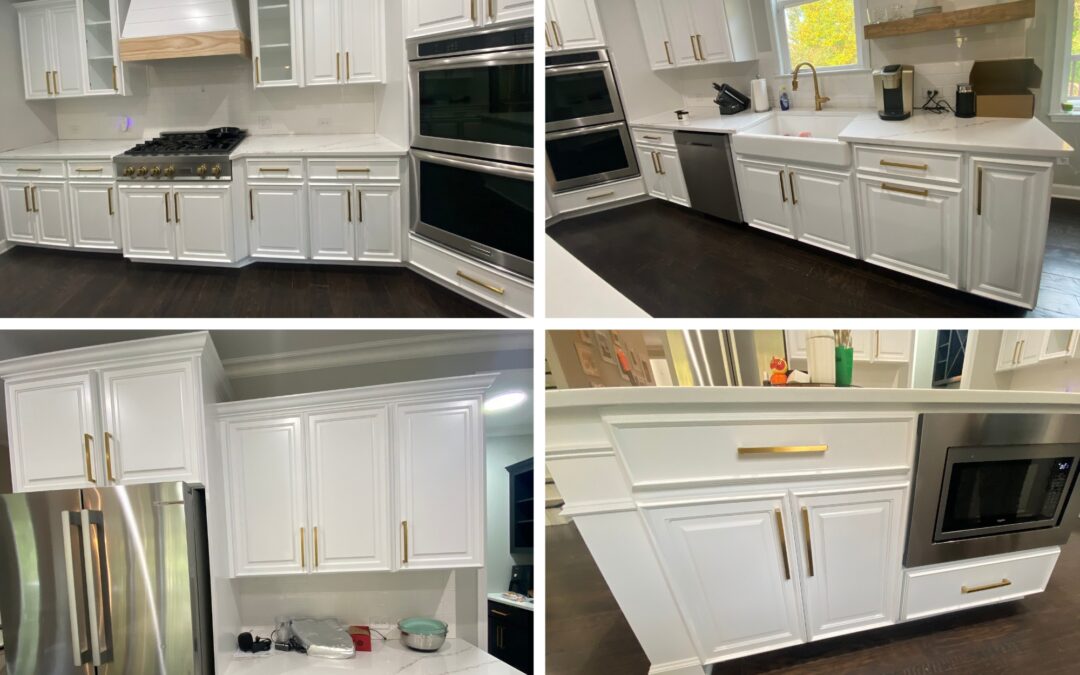
If your cabinets are solid wood and in decent shape, painting is often a great option. With proper preparation, they can look new without the cost of replacement. If they are laminate, painting is still possible, but it needs the right process and realistic expectations about wear over time.
If storage is the main problem, a mix of refinishing and small custom additions can solve both appearance and usability issues. There is no single best solution. The right choice depends on material, condition, layout, and long-term goals.
FAQs
- How can I tell if my cabinets are laminate or solid wood?
Look at the edges of doors and inside the cabinet box. Solid wood usually shows natural grain patterns and feels slightly textured. Laminate often looks very smooth and uniform, with a thin layer over a different material underneath.
- Does paint last as long on laminate cabinets as on wood?
Not usually. Even with good preparation, laminate is more likely to chip over time because paint does not bond as deeply as it does to wood.
- Is sanding always required before painting cabinets?
Yes. The type and amount of sanding change based on the material, but skipping this step almost always leads to poor results.
- Can damaged cabinets still be painted?
Minor damage can often be repaired before painting. Severe water damage or peeling laminate may require refacing or partial replacement instead.
- Is painting cabinets cheaper than replacing them?
In most cases, yes. Painting and refinishing cost less than full replacement, especially when the cabinet structure is still solid.
When it comes to paint kitchen cabinets, the surface underneath matters more than most people realize. Solid wood and laminate may sit side by side in the same kitchen, but they demand very different preparation. That prep work shapes how the cabinets look, how they feel, and how long the finish holds up.
Understanding that difference helps homeowners make smarter choices, avoid early failures, and get results that still look good years down the line.
Hire Charlotte’s best-rated experts to Paint kitchen cabinets
Carolina Cabinet Pros is your North Carolina and South Carolina experts in Full-Service Cabinetry: providing professional cabinet staining, complete refinishing services, including cabinet refacing and lacquer cabinets, and high-end custom cabinetry. One call for a complete cabinet restoration anywhere in your home. Stop juggling contractors, call Carolina Cabinet Pros. From the Mountains to the Beach– no home is out of our reach. Contact Carolina Cabinet Pros to schedule a free consultation today, 704-363-3061.